
 Posts


Goan food is famous all over the world owing to its assimilation of the east with the west. When the Portuguese came to Goa they brought not only their cultural traditions and religion to Goa but also their food habits, their ingredients and their finesse to the Goan table. Goan food has therefore gone through a series of updates from whatever ethnic Goan food might have been before the Portuguese set foot in the state and some of Goa’s original food recipes may have been lost due to the lapse of time and the loss of transmission to the next generation. However Goan food today, remains a very tasty and mouth watering proposition for anyone who wishes to indulge.
For one thing, Goans use natural resources more than anyone else in the country. Goans have an enslaved fondness for something Goan in terms of ingredients for their cooking. So while the rest of India happily relies on acetic acid to give the contribution of vinegar to their kitchens, Goans will only swear by Goan vinegar traditionally made from toddy which is extracted from the Goan palm tree. Coconut for the Goan fish curry has to be from Goa as its taste is distinctly richer compared to other varieties from Kerala or elsewhere invading in Goa. At one point of time even cooking oil was essentially Goan palm oil. However with the health factor intervening in recent times, Goans have reluctantly allowed all kinds of healthier packaged vegetable oils in preference to a happy heart instead of happy tastebuds.
The Goan brew “Feni”, is the source of many ballads, stories and some even some sort of fame for the Goan brand. Goan Feni can also be blended in a potent concoction as a treatment for common ailments such as common cold, stomach pains etc . Its close cousin is the Goan palm fenny also known as “Maddanchi Feni” in Goa which is a distilled produce of Goan toddy and which is also widely available in Goa.
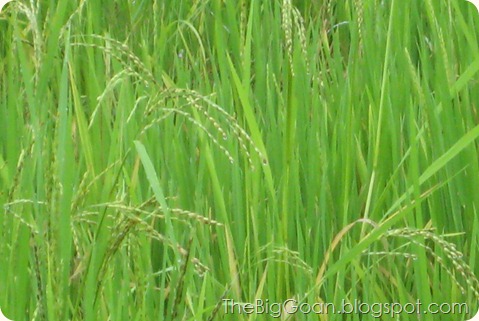
For vegetable, be it the Goan tambddi bhaji, ladyfingers,gourd, pumpkin, or any common vegetable, the bias is always for home grown fruit which is considered to be more richer in taste and unadulterated in terms of pesticides etc. Goa is also known to have several varieties of rice which have been considered far superior to other hybrid varieties which have found their place in Goa thanks to their commercial compulsions. However Goan varieties of paddy including the nostalgic variety of “azgo” has been considered as a great nutritional produce and was always a must for the traditional preparation of Goan “kanji”.
The cooking style of Portuguese has shaped the repertoire of Goan dishes over the years of colonial rule spanning over 450 years. The Portuguese influences on Goan food was complete with the introduction of its natural produce in Goa and you had vegetables and fruits coming all the way from Portugal to be sown in Goa. So you have the potatoes, tomatoes, aubergine (brinjals) , chillies, papaya, pineapple, guava, passion fruit etc being a direct influence of Portugal on Goa. Also in company are various herbal and spice introductions such as coriander, dried varieties of chillies, garlic and turmeric with the essential Goan vinegar which could round off the Portuguese influence on the ingredients in Goan cuisine.
The Goan chilli is essentially a straight import form Portugal and before its introduction to India, Goans were used to homegrown spices such as pepper and cloves to derive the requisite taste. However the chilli gave the much needed breadth in the dimension of Goan cooking and remained to define Goan food tastes forever.
Portuguese influences on Goan food also reflect strongly in Goan sweets which are a direct import from Portugal and still bear those distinct names.So you have the dedos da dama, petas de freiras, pasteis de natas, pasteis de Santa Clara decorating the Goan table at Christmas time along with the Dodol and the Bebinca which is inseparable from many Goan hearts.
In addition to the popular sweets in Goa, the Portuguese brought to Goa their delight of guisados, caldei-radas and assados prepared with both fish and meats. The tangy and spicy delicacies of Prawn Balchao and the Pork vindaloo are delights which you wont miss anywhere in Goa during the traditional Goan feast with the Goan table also hosting the pork sorpotel and the traditional Goan sannas to compliment all the gravies on the table.
Some believe that Goan cuisine clearly reflects a rare combination of Arabian, Portuguese and Goa’s own native cultures to blend into a wholesome new cuisine in Goa which is a blend of rich yet simple cooking. Goa’s peaceful lifestyle and laid back moorings easily compliments its cuisine and endears its followers to be lured by the taste of its very infectious delights which are distinctly different from the rest of the country.
Seafood in Goa is a department on its own and the Goan palate is always ready for an extra bite of the sea with scores of dishes adorning the Goan menu. Shell fish and prawns are a sub category which have their own following in Goa and you can find various preparations of these two oceanic delights in Goa. The prawn curry rice is slurped up with as much voracity as is the crabs xec xec which is a craze at many restaurants Goa. Among other shell fish, the mussels and oysters are also a big draw.

Goan shacks stacked up by the beach have traditionally served Goan food to the various tourists coming to Goa for the Goan bite. However most of these outlets have turned commercial and have unfortunately lost their Goanness. Much of this is due to the reluctance of some shacks in welcoming Goan customers to their restaurants which is actually a negative sign for them as they do not get to know the level of deviation in food as the true critics can only be from Goa and anybody else will only pamper their bad food.
Having said that I must say there are some very good restaurants all over Goa who serve real good authentic Goan food which can match upto the best. A close look at these restaurants reveals that they are more comfortable with Goan customers and Goan families which patronize these restaurants helping them to keep up to the taste of Goan cuisine.
